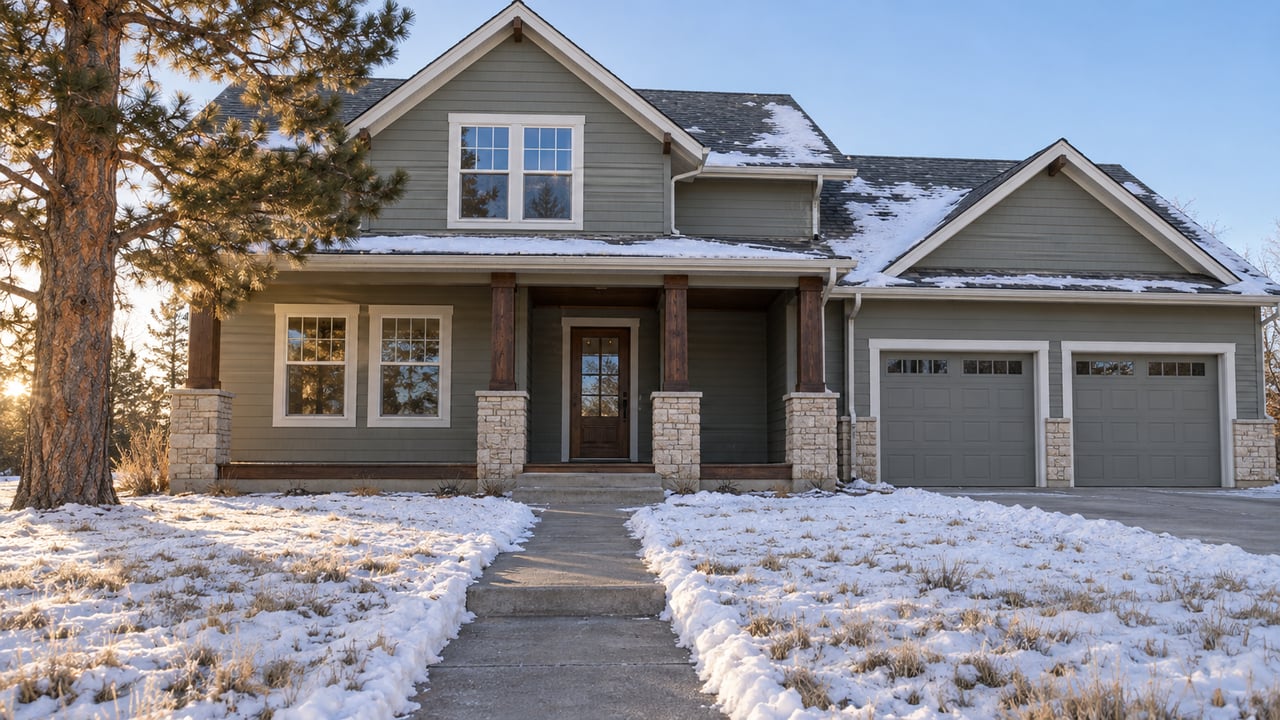
Inside the Career and Technical Education building at Custer High School, two classes of about 14 juniors and seniors each spend sixth and seventh period framing a house. It is about 1,040 square feet, with three bedrooms, two bathrooms, an open kitchen and living room, and a utility room. A garage or deck could be added later. Superintendent Dr. Tim Frederick described it to the Custer County Chronicle as "a perfect house, perfect setup, wide open space for a starting family."
That is the house a lot of people moving to Custer for work hope to find. Its price tag explains why it is hard to find. Frederick put the expected build cost at "a little over $250,000." That figure leaves out the land, which the city is giving. Building the streets and infrastructure to reach the lot could add another $40,000 to $50,000. Even with student labor, donated land and trades volunteering their time, this small new starter home comes to about $300,000.
If you're comparing Custer with other Black Hills towns because of a job at the school, the hospital, the city or the county, keep that number in mind. It is a useful benchmark for Custer's entry-level prices. The community projects now underway are aimed at local workers, and their organizers are still working out how those homes will be sold.
The cost of a small new house
A second project lands in the same range. A Habitat for Humanity steering committee in Custer, working with Black Hills Area Habitat for Humanity and Aspen Federal Credit Union, plans three homes in the Homestead Addition. The lots are each larger than 9,000 square feet, and one is over 13,000. Committee member Gene Fennell told the Custer County Chronicle that Habitat can build a home that appraises at $275,000 for around $220,000, "thanks to volunteer labor, discounts and in-kind donations." The same project still needs 200 feet of sewer line and two manholes.
The two projects have different funding and different builders, and their estimates run from about $220,000 for the Habitat build to about $300,000 for the school's house once infrastructure is counted. Both rely on donated labor, discounts or land. Habitat's own numbers show a gap of about $55,000 between what its home costs to build and what Fennell said it would appraise for, and he credited volunteer labor and donations for that difference.
Resale prices reached that level a few years ago
Custer's last housing study gives some history. The Custer County Housing Study Update, published through the South Dakota Housing Development Authority in November 2023, tracked residential sales in the City of Custer using state and county records. The median sale price rose from $180,700 in 2018 to $190,000 in 2019, $210,000 in 2020, $237,000 in 2021 and $282,000 in 2022, when the city recorded 38 sales. Those were mostly existing homes with established taxable values, not new construction.
These are 2022 figures, not current ones, but they show the trend. By 2022, the typical existing home in Custer was selling for about what a 1,040-square-foot new home is expected to cost to build in 2026, even with free land and student labor. For a buyer who wants an entry-level home now, that puts existing houses and new construction at roughly the same price.
When the Custer County Chronicle reported Fennell's hopes for the Habitat homes, it described the local housing market as "shallow and expensive." He has spent years trying to get workforce housing built in Custer. Nearly 20 years have passed since the last Habitat home was built in town.
Who the new homes are for
Custer's new starter homes are coming through community partnerships aimed at the town's workforce, and each one is moving at its own pace.
| Project | Size and scope | Who it's aimed at | Status as reported |
|---|---|---|---|
| Custer School District CTE Community Housing Project | ~1,040 sq ft, 3 bed, 2 bath; one house every 18 to 24 months as a goal | Educators, healthcare workers, emergency services and other essential workers | First house under construction in the CTE building; site and sale plan not final |
| Habitat for Humanity, Homestead Addition | Three homes, likely three bedrooms | Teachers, city and county employees and other local workers | Lot cleared by Rotarians in October 2026; replat with the City of Custer pending |
| City of Custer and Black Hills Area Community Foundation subdivision | 13 lots off an extension of Gordon Street, two set aside for school district employee housing | Workforce housing | Sketch plan before the Planning Commission on Oct. 13, 2026 |
At the school project's community meeting, reported by the Chronicle, a resident asked how the district would decide who buys the house, saying it "looks like a great house for a retired person." Frederick said the district is working with industry partners on a plan for buyer eligibility and long-term affordability. "We answer what we can, but we are also very transparent in telling you we don't know yet," he said.
The student-built and Habitat homes are being planned for specific groups of local workers, and the organizers, not open bidding, will decide how they're sold. A buyer who isn't part of one of these programs is shopping among existing houses.
Where the 13 lots come from
The largest project began with a land swap. In March 2025, the Custer City Council paid for surveys and plats to study a possible land exchange with landowner Ronald A. Bradeen for housing. On Dec. 15, 2025, the council approved the plats and the transfer. The city conveys about 1.27 acres of the Homestead Addition/Bradeen tract and receives Lot 7A, Block 83.
Lot 7A now makes up two of the 13 lots in the sketch plan that City Planner Tessah Behlings presented for the Oct. 13, 2026 Planning Commission meeting. The other 11 are on the Chapinski Tract, which the city acquired in 2024 to fix an access problem. Access would come from an extension of Gordon Street, and utilities will have to be extended. For the school's house, that kind of street and infrastructure work was estimated at $40,000 to $50,000.
What this means for a job-driven move to Custer
For most buyers, the way into a Custer home right now is resale, where prices sit close to what a comparable new house would cost to build. The Habitat homes, the student-built houses and eventually the Gordon Street lots make up a second, smaller route that depends on applications and on how fast each house can be built.
That second route moves slowly. The school district aims to finish one house every 18 to 24 months and calls that timeline flexible because the program is new. For 2026-27, the school board designated $100,000 for materials. Habitat already had seven applicants for its three homes when the Chronicle reported on it in September, and the committee was asking for more. Anyone interested can apply through Black Hills Habitat for Humanity, talk with a member of the steering committee or stop by Aspen Federal Credit Union, which has donated $10,000 and approved $2 million in loans for the project.
If you're buying an existing home, our post on what Custer County's records show about a rural home covers where to find a house's history. If you're looking at acreage outside city limits, see our guide to land and cabins near Custer, which covers a different market from the in-town homes in this post. For a broader look at the town, start with our Custer neighborhood page.
A few questions we hear about Custer starter homes
Can I buy the student-built house? The district hopes to sell it at an affordable price to educators, healthcare workers, emergency services and other essential workers. Buyer eligibility, sale terms and the final site were still being worked out at the November community meeting. Sale proceeds go back into a fund with the Black Hills Area Community Foundation to pay for the next house.
Will these projects bring Custer resale prices down? Three Habitat homes and one student house every 18 to 24 months are small numbers. They add homes for local workers, but the existing homes most buyers choose from will still be priced close to what new construction costs.
Is new construction cheaper than resale in Custer? Not for a small home. Even with donated land and labor, the community projects estimate roughly $220,000 to $300,000 to build, and the 2022 median resale price in the city was already $282,000.
If you're moving to Custer for a job and trying to decide between resale and waiting for a program home, or you own a Custer home and want to see how it compares with current construction costs, The Kahler Team can walk you through the recent sales on your street. We'll handle your home. Get a free home valuation and we'll put your Custer house next to what it would take to build it today.